Saturday, May 13, 2006

Name-Dropping Revisited (WW? #15)


Jess has unveiled her latest Writer’s Weekly Question, and this one might be something of an opportunity to name-drop.

Writer's Weekly Question #15:
Name a few famous writers you have had an up-close-and-personal encounter with. Did the encounter have an impact on you and your writing in some way? If so, how?
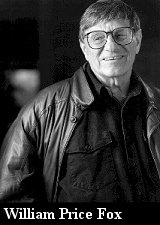
Writing really can be a lonely art, but the catch is that it doesn’t have to be. When I look back on all the years I was writing without any input from others, I cringe. I did have some influence, though. The first published writer I met who affected my writing was someone as far removed from fantasy writing as could be. Southern author William Price Fox taught a class at my college, the University of South Carolina. When I went there, I couldn’t resist a class devoted to fiction writing. In hindsight, I’m not sure how much I really got out of his class, but despite all the things he didn’t teach that he might have, I learned a few things.

He challenged us to explore short stories, something I’d not done up to that point. The result was one of the goofiest things I’ve ever written, a short story entitled “Here’s the Deal.” The story remains unpublished, but I’m pretty sure it will eventually find its way into print. Why so certain? Because it’s really just damn funny. The first draft met with Fox’s criticism, and he made some good points that really improved the work when I did write a second draft years later. I’d written a story about a demon trying to recruit a medieval swordfighter to serve as his right-hand man in Hell. Things get complicated rather quickly, mainly because of a second demon who’s so pathetic, he’s never actually managed to steal a mortal soul. We had to read our stories aloud (one of Fox’s rules), and I gave the second demon a voice like Art Carney from the “Honeymooners.” Even Fox agreed it was funny, but he pointed out that I had a bunch of characters standing around just talking. For a setting with a bunch of guys with swords, I didn’t have much action. About the only other thing I took from this class was that I was a great story reader. I’d probably do great as a voice for audio books, but I think you’ve usually got to be an established actor to land that work.
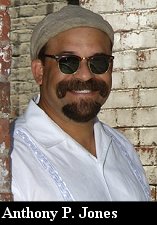
From there, I went without much of any influence from an established writer. My wife became my single source of criticism, lest you count the few rejection letters my writing received in the latter half of the nineties. Only once we moved to Richmond, did I meet other writers who could offer useful input. My wife and I meta fellow by the name of Anthony P. Jones; although to us, he’ll always be just “Tony.” At the time, he wasn’t published yet but he was very connected within the writing community (his book Operation Smokeout was published this past fall). He introduced us to people like Dennis Danvers, and it was because of Tony that we learned about James River Writers when it first started in 2003.
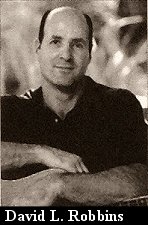
At James River Writers, my wife and I continued to meet some great writers such as Phaedra Hise, Dean King and David L. Robbins. David’s become a good friend to us, and he’s why we’re involved in the planning for this year’s conference. I hope the end of our labors will prove his faith in us wasn’t unfounded. With so much planning to do, I get really terrified about it some days, even with all the great things accomplished thus far. David has made time for me and Sheri to discuss the art of writing and some of the tricks of the trade, such as writing a great battle. I could say a lot more about David… a whole lot more, but as I’m about to start his forthcoming book The Assassins Gallery, I’ll save that for some entries later this month.

Before I can start The Assassins Gallery, I've still got to finish Tailchaser's Song by Tad Williams. I've been tearing through the book this week, and if I don't finish it tonight, then I probably will tomorrow.

HIGH NOTES: The Empire Strikes Back


When the original “Star Wars” film was released, John Williams delivered a score that redefined movie music, even as the film itself forever changed the film industry. Williams deserves a lot of credit for the success of the “Star Wars” films, so he also faced high expectations on the first sequel, “The Empire Strikes Back.”

Not everyone may agree, but I think Williams topped himself and then some with the score to “Empire,” if for no other reason, then for the theme he introduced to highlight the bad guys: “The Imperial March (Darth Vader’s Theme).” Out of all the themes (without vocals) Williams created for “Star Wars,” none of them hold a candle to this song. For many years, I had a tradition for any new stereo I bought, whether for my home or my car, I always “christened” it by playing this song.

Of course, one song does not a great score make. Even as Williams introduced a great song for the bad guys, he offered a little something new for the heroes. He gave us “Yoda’s Theme.” Where “The Imperial March” is all military with its brass and drums, “Yoda’s Theme” belongs to the string section and woodwinds. Much as I praise “The Imperial March,” it’s this great contrast Williams gives us for Yoda that makes the former song so powerful.

Both of these themes dominate the score, but they never grow tiresome because of the variety in which Williams employs them. Perhaps the best subtle use of “The Imperial March” comes within “Carbon Freeze/Luke Pursues the Captives/Departure of Boba Fett.” As Han Solo is frozen in carbonite, “The Imperial March” is unleashed to full effect, followed by a sad rendition of the Han and Leia love theme. The focus shifts back to Vader, though, and when that happens, Williams makes it a gentle transition by toning down the horns and adding in a soft play of the drums and cymbals. This might well be my favorite use of “The Imperial March” in all of the films.

I did mention the love theme, and it wouldn’t be fair to offer a critique of this score without a mention to that. The music is powerful and romantic and also closes out the film. It’s a great touch to remind everyone that Han is still very present in spirit at the end, and to a degree foreshadows that his rescue will be the beginning of the next film. My only complaint about the love theme is that we don’t get an orchestral version of this theme as we do with “Yoda’s Theme” and “The Imperial March.” It’s a great piece of music, but it’s forced to play second fiddle to the two big ones.

Oddly enough, while Williams neglected an orchestral treatment for the love theme, he did take time to write one for “The Asteroid Field.” I can’t complain about that, because this really is stirring music. Years ago, I bought a collection of music from the original trilogy, and it included this piece. Idiot that I am, I got rid of this CD since I had the anthology set mentioned in my previous entry for “Return of the Jedi.” The orchestral version really was great. In many ways, it follows the film version of this piece, but it starts and ends differently. The film version gives us another pounding rendition of “The Imperial March” before moving into the theme for the chase within the asteroid field. I can’t tell you how badly I want to get my hands on this CD again just for that one song!

Other Scores by John Williams:


This really was the best score within the original trilogy. Williams introduced four themes that improved on what he’d started in the original film and still managed to make them fit in with the first film’s themes.

As with my critique for “Return of the Jedi,” I should mention the titles I refer to might not match the track titles on the special edition release of this score. The titles I use were taken from the “Star Wars Anthology” I purchased long ago back in college.

Thursday, May 11, 2006

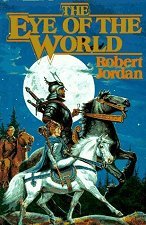
DUST JACKETS: The Eye of the World


Out of all my “Dust Jackets” entries, I’ve looked forward to this one the most. My path to Robert Jordan’s world (nicknamed “Randland” by his more hardcore followers) was a long and indecisive one.

The Wheel of Time series came to my attention in the early nineties while I was in college. Tor Books released a free printing of the first third of The Eye of the World, the first book in the series. I have to applaud the publisher’s promotional strategy and the fact it worked. That they would do this just shows their faith in Jordan, because even a third of that book wasn’t a light read. Oddly enough, I didn’t read the free copy in its entirety. My curiosity got the better of me, and I went ahead and bought a copy of the paperback.

This is where you might expect me to say, “Once I started, I was hooked and couldn’t put the book down, finishing all 832 pages in no time.” Not quite. Actually, the first time I tried to read this book, I couldn’t get into it. Months later, I gave it another try, with the same results. I approach most books with a “three strikes” rule, so when I gave it that third try, it was all or nothing. I didn’t plow through the book, but Jordan did hook me.

Jordan opens with a prologue, which as many of you might guess, didn’t do much for me. Yes, it sets the tone, but it really adds little to the book itself. Somehow, I think when Jordan writes the final book, that prologue will take on new meaning, but we’ll have to wait to see.

From there, Jordan introduces us to the main character, a farm boy named Rand al’Thor. Yes, a farm boy. Is there anything more clichĂ© within fantasy than the farm boy destined for greatness? Yet Jordan makes it work, because this character needs a lot of room to develop or else this series wouldn’t have lasted that first book, much less made it to eleven (with more to come).

I could probably spend an entire month of entries picking apart why this book and series works, but let’s just discuss the magic for now. Jordan might never use the word magic in his book, but there is magic. Women called Aes Sedai channel the “One Power” to perform all sorts of things such as healing, moving objects and controlling the weather. Jordan does a great job defining these abilities, and never makes it seem like these women are without weakness.

The Aes Sedai hold powerful sway over the rulers of all countries. So what about the men? Yes, there are men who can “channel” as the women do, but there’s a catch. The male half of the “One Power” has become tainted, and any man who channels for too long will go insane. Because of this, the Aes Sedai hunt down these men and cut off their ability to channel. You might call it the magical equivalent of neutering. Complicating matters is that prophecy (you knew there had to be one, didn’t you?) claims a man who can channel will become known as the Dragon Reborn and save the world—by breaking it. Given that last detail, not everyone wants to see the Dragon Reborn and will do anything to stop him from rising to power. The question Rand faces in this book is whether he is that man.

Here’s where I pay The Eye of the World the oddest compliment I could possibly give any book. I also think Jordan might find it insulting, but I’ll say it anyway. I despised the ending to this book. Things just ended too abruptly and felt a bit too pat even with the obvious need for future books. I got the impression the book could have kept going, but he needed some way to just close it and close it quickly. Despite my disappointment with the ending, I knew the moment I was done that I wanted to read the next book. He just created such a credible world with strong characters, political intrigue and well-defined magic that never goes over the top. I didn’t just want to go back to “Randland,” I needed to. As I’ve grown as a writer, I’ve also come to appreciate what a great writer Jordan really is. No matter how good I get, I read his books and feel like a hack.

Other Books by Robert Jordan:


With all this praise, you might think I’ve demolished my way through this series. Not so, but I’ve known people to do it. A co-worker read through all eleven books for the first time within a matter of weeks, but I’ve only made it through book six, The Lord of Chaos. I’ve paced myself with this series, but there are times when the desire to plow into them until I’ve hit the end of the latest book becomes near unbearable. The closest I’ve come to doing this was the end of book five, The Fires of Heaven, which offers up one damn good cliffhanger of an ending. I’m a bit overdue to tackle book seven, so you can probably expect a review on that one sometime this summer.

Tuesday, May 09, 2006

I've Got a Secret (Supper, That Is)

A quick entry for today, but one I’m nonetheless excited about. I was sitting in the den with my son watching television when I heard the front, screen door open and close. Then someone’s footsteps hurried off, and I was sitting there thinking, “What the hell?” I get up and see a FedEx truck in front of the driveway with the driver climbing in and pulling off.

Now, my wife has done the ebay thing for years now, so I figured she must have gotten something. I open the door and find a fat FedEx envelope there, but the name on it isn’t my wife’s but mine! Then I saw who it was from: AOL’s Book Maven herself, Bethanne Patrick. Last month, she did a little contest and the first ten contestants would win a free, autographed Advanced Reader’s Copy of Javier Sierra’s religious thriller The Secret Supper.


Needless to say, I’m really excited to get my hands on any free book, and this one certainly demands a little attention as it hopes to cash in on The DaVinci Code’s success (even though the book was conceived of long before Dan Brown’s successful novel). This will probably be the book I read, after I finish reading David L. RobbinsThe Assassins Gallery. I’m still working on Tad WilliamsTailchaser’s Song. Just haven’t had enough reading time of late.

Sunday, May 07, 2006

HIGH NOTES: Return of the Jedi


To kick off my month of “High Notes” entries devoted to the “Star Wars” films, I’ve decided to start at the end, “Episode VI: Return of the Jedi.” Hey, if George Lucas can do the films out of order, why can’t I?

Oddly enough, I’m not a big John Williams fan, but I do love the music he’s produced for the “Star Wars” films. One of the first CD’s I bought when I was a kid was a collection of music from science fiction/fantasy films just so I could get the three tracks of “Star Wars” music that was on it. The only track on it from “Return of the Jedi” was “Luke and Leia.” At the time, I was disappointed, because I was a teenager who had an ear mostly for the faster, more bombastic themes like the main title and the ever-popular “Imperial March.” Over time I’ve come to like “Luke and Leia” more, but it’s still a far cry from my favorite song on this score.

The big track for me and for many fans of movie scores (not just the “Star Wars” fanatics) is “Final Duel.” This is the music that accompanies the end to Luke Skywalker’s lightsaber duel with his father Darth Vader. The start of the music is just damn creepy as Vader taunts Luke. As Luke attacks, a choir of male voices begins. There’s nothing within the music to the original trilogy that resembles this track, and it’s a great one. The most shocking thing about this bit of music is that fans waited for years to get their hands on it. I personally had scoured music stores looking for a “Return of the Jedi” CD, and when I finally found it, I was shocked to find this music wasn’t on it. I’ve never heard why it was omitted, but years later I stumbled upon a four-disc set entitled the “Star Wars Anthology.” As you might guess, it wasn’t cheap, and in those days before Amazon.com and things such as Barnes & Noble’s “Red Dot” that allowed a preview of what you were buying, I simply had to gamble this one song would be on there. Why was this such a gamble? I’d already bought the CDs to all three films (which included a two-disc set for the original film), so while the anthology contained a lot of stuff I’d never had before, I basically bought it for that one song. I have never regretted the purchase, and I think I cheered when I played this track.

Now, I purchased this anthology set in the days long before the controversial “special editions” were released in 1997. Musically, “Return of the Jedi” underwent the most changes out of all three films. In addition to the goofy dance sequence that was added, Lucas and Williams decided to redo the closing music. In the original version, the Ewoks celebrate and their song tracked the final scene as the heroes are reunited. For the special edition, scenes showing celebrations throughout the defeated empire were added, accompanied by a piece of new age-style music which I hated. I’m not actually one of those fans who despised all the changes Lucas made in the special editions, but I was a bit disappointed by this. A change made sense, because the “Ewok Celebration” really wouldn’t have made much sense over scenes on Coruscant, Bespin and Tatooine. My complaint is that the music just doesn’t sound like “Star Wars.” It’s fine music, but I’d expect to find it on some New Age collection CD not in “Return of the Jedi.”

Other Scores by John Williams:


So how does this score stack up against the rest of the films in the saga? I’d say it holds up pretty well. There are so many great tracks with “Parade of the Ewoks,” “The Forest Battle” and “Into the Trap” among them. I don’t think it was the best music from the original trilogy, though. I’ll save which one I think that is for my next High Notes entry.

A note about the track titles I refer to: these references are taken from the titles used in the aforementioned "Star Wars Anthology" set. For the special edition re-release of these scores, many of these tracks were assembled differently and given updated titles. Since I don't own these CD's, I'm not able to reference them by those titles.

Saturday, May 06, 2006

Baby Did a Bad Bad Thing (WW?)


Jess has resumed her Writer’s Weekly Question, and as always, her question doesn’t disappoint. She’s given out a very timely one that touches on the whole Kaavya Viswanathan controversy.

Writer's Weekly Question #14:
How much do you borrow from your favorite writers, and how much is actually your very own ideas? At what point does "borrowing" become "plagiarism?"

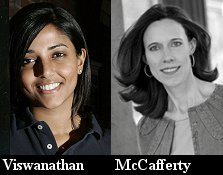
For those unfamiliar with how this question ties into Viswanathan and her book How Opal Got Kissed, Got Wild and Got a Life, a quick explanation. Viswanathan, now a Harvard student, first made headlines when she was in high school by landing a half million dollar book deal with Little, Brown & Company. The book came out this past April, and fans of Megan McCafferty’s books immediately noticed certain phrases that appeared lifted from McCafferty’s books Sloppy Firsts and Second Helpings. Harvard’s newspaper "The Crimson" broke the story and even offered examples of how Viswanathan appears to have plagiarized McCafferty’s works. Viswanathan has defended the similarities by claiming they were an accident, that the phrases must have gotten stuck in her mind when she read McCafferty’s books—a claim weakened by the more than two dozen instances where this happens within her book.

Had Viswanathan only committed this error one or two times, I’d be inclined to take her at her word—that it was an honest mistake, because the phrase (being a good one) was in her head and found its way onto the page when she needed it. I say this because, I’ve had at least one case I know of where I’ve done something similar.

While my wife Sheri and I were writing our first effort together, The Knight of Death, I was struggling for a decent curse word. I didn’t want to use the traditional stuff, but rather something local to this fantasy culture we’d created. The phrase that answered my call was “burn me.” I read over it a few times after I wrote it and thought it sounded great. Even Sheri liked it. I was all happy until I started reading through one of Robert Jordan’s books and realized why the phrase sounded so good. I’d subconsciously pilfered it from his “Wheel of Time” series. Admittedly, I might could have gotten away with that bit of thievery, but I worried others would see it and recognize it as something I’d taken from Jordan’s books. Thus, I ditched it and found another phrase to use.

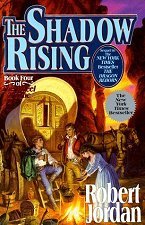
Speaking of Robert Jordan, I have had at least one case where I did purposefully try to mimic something he wrote. Perhaps my favorite sentence from any book came from Jordan’s The Shadow Rising. In the third chapter of that book, two warriors are compared to each other from the point-of-view of a young village boy: “Perrin was not sure which of the two men was more deadly, but he thought a mouse could starve on the difference.” I regret I can’t offer up the sentence I wrote, because I can’t find it and I’m not sure what it was. I did write a sentence comparing two things in a similar manner though, including the basic structure of the sentence. I adopted different wording to accomplish this, though, enough to keep it as a very subtle tribute to Jordan without committing plagiarism. I probably can’t find it, because I recall Sheri was uncomfortable with others potentially recognizing what I'd done and seeing us as imitators.

So when does borrowing turn into plagiarism? That’s a tough one to answer. I think a writer has to let the characters guide him/her. You can’t ask yourself what other writers would do or have done. A writer has to service the story at hand and be committed to telling just that story. I think if someone does that, then they’ll be less likely to steal other people’s work.

Friday, May 05, 2006

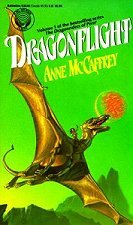
DUST JACKETS: Dragonflight


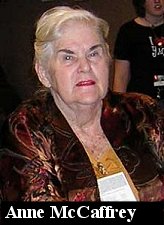
I’ve made more than one mention within my blog about Anne McCaffrey’s Dragonflight. This was the book that hooked me on reading for good, and I’m not sure I could have picked a better book to start with than this one.

Even in 1990-91 (I can’t say for certain which year I read it), this book was already a classic. McCaffrey does such a great job of introducing this complex world with warriors who ride on dragons to protect their world from thread, a mindless alien organism that falls from the sky and destroys everything it touches. The thread doesn’t constantly fall, though. It only lasts a few decades, coming every two hundred years. The society has built itself around supplying the dragonriders with whatever they need, but with a somewhat unprecedented period of four hundred years without thread, the people of Pern are questioning the need for the dragonriders. Worse, when the thread does start to fall, the years of neglect have left the dragonriders without enough dragons to fight the thread.

McCaffrey deftly introduces this world through the eyes of Lessa. A dragonrider named F’lar recruits/abducts/drafts her as part of a plan to make himself the Weyrleader of Pern’s dragonriders. Lessa gives readers a strong, female character for whom to root. F’lar also proves an incredibly heroic figure whose drive to save Pern comes dangerously close to the idea of the ends justifying the means. Both of them come with plenty of flaws, including a dislike for each other which is made all the more difficult when their dragons mate, an act that forces them into a sexual relationship of their own.

One of the elements McCaffrey uses in this book is time travel. Time travel is such a difficult element to employ within a story, but she pulls it off perfectly. I’ve always preferred time travel stories that follow the rule, “You can’t change the past.” McCaffrey follows this rule to perfection.

Of course, you can’t really discuss a book about McCaffrey’s dragonriders and not talk about the dragons. These aren’t simple beasts of burden that burn thread out of the sky. They’re intelligent creatures that can communicate telepathically with their riders, and indeed, they are characters within the book in their own right.

Other Books by Anne McCaffrey:


McCaffrey just gets so many things right in this book. Even almost forty years after first being published, it remains a satisfying read. The credit goes to her attention to detail in crafting this world and the characters. In some ways, Lessa was ahead of her time for such a strong female character. I wish more fantasy and sci-fi novels offered characters like her.